
How to Read and Master Piece Rotation in Piece Out
Rotating pieces cause most failed boards and most breakthroughs. Here is how to read rotation arrows the way experienced solvers do.
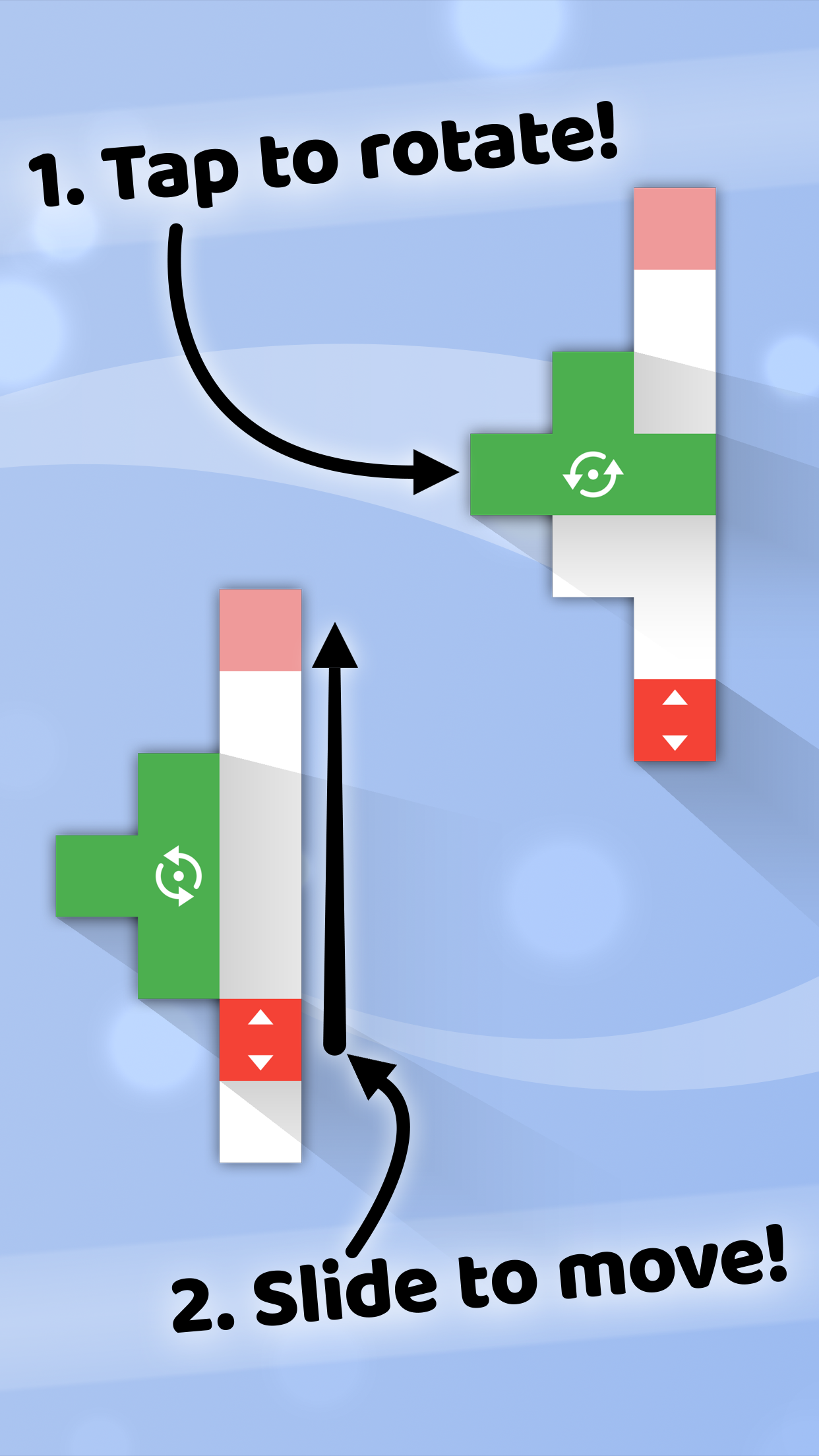
Rotation is a commitment, not a nudge
A slide can be undone in your head before you ever make it. A rotation cannot. When a piece spins, it sweeps a wide arc, changes its footprint and often blocks the very corridor it came from. Strong players treat every tap-to-rotate as a decision with consequences two boards deep.
The first habit worth building: before rotating, name the cell the piece needs to end on, then trace the arc backwards. If the swing path passes through a wall or another piece, the rotation you want is impossible regardless of how badly you want it.
Direction matters more than destination
Most rotatable pieces in Piece Out turn in one direction only. That single constraint creates the game's most common trap: rotating three times to undo a mistake also works, but it burns three moves against par and may leave the piece stranded mid-loop.
When a board gives you a one-directional spinner, plan the full cycle. Sometimes the correct first move is a rotation that looks wrong because the piece only reaches its useful orientation on the second or third turn.
Rotation as a positioning tool
Intermediate boards use rotation the way chess uses a knight's move: not to move far, but to land on a square that sliding cannot reach. An L-piece wedged in a corner often escapes through a single well-timed spin rather than five slides.
Watch for boards where the target shadow is rotation-locked. The game is telling you the final orientation in advance, which means your last three moves are already decided. Solve backwards from that shadow and the board usually halves in difficulty.
Drill it deliberately
Pick five mid-chapter boards and replay them counting only rotations. If your count exceeds the piece's rotation count, you are guessing. Drop the count and the boards start yielding in single-digit move counts. For guided practice, our coaching sessions spend a full block on exactly this skill.
Key takeaways
- Trace a rotation's arc backwards before tapping
- One-directional spinners need full-cycle planning
- Target shadows reveal the required final orientation
- Count your rotations; guessing always costs moves
Kumobius Level Team
The Melbourne-based designers who built the Piece Out campaign and still tune every board by hand.
About this topic
Common questions readers ask after this article. More answers live on the FAQ page.
Play the puzzle behind the article
Piece Out is free on Google Play: 700+ boards, a daily puzzle, and zero timers. Download it and test the ideas from this post yourself.